


How to Pick the Right Ski School in Niseko for You
What a school founder and instructor trainer looks for, after 34 seasons
Date :
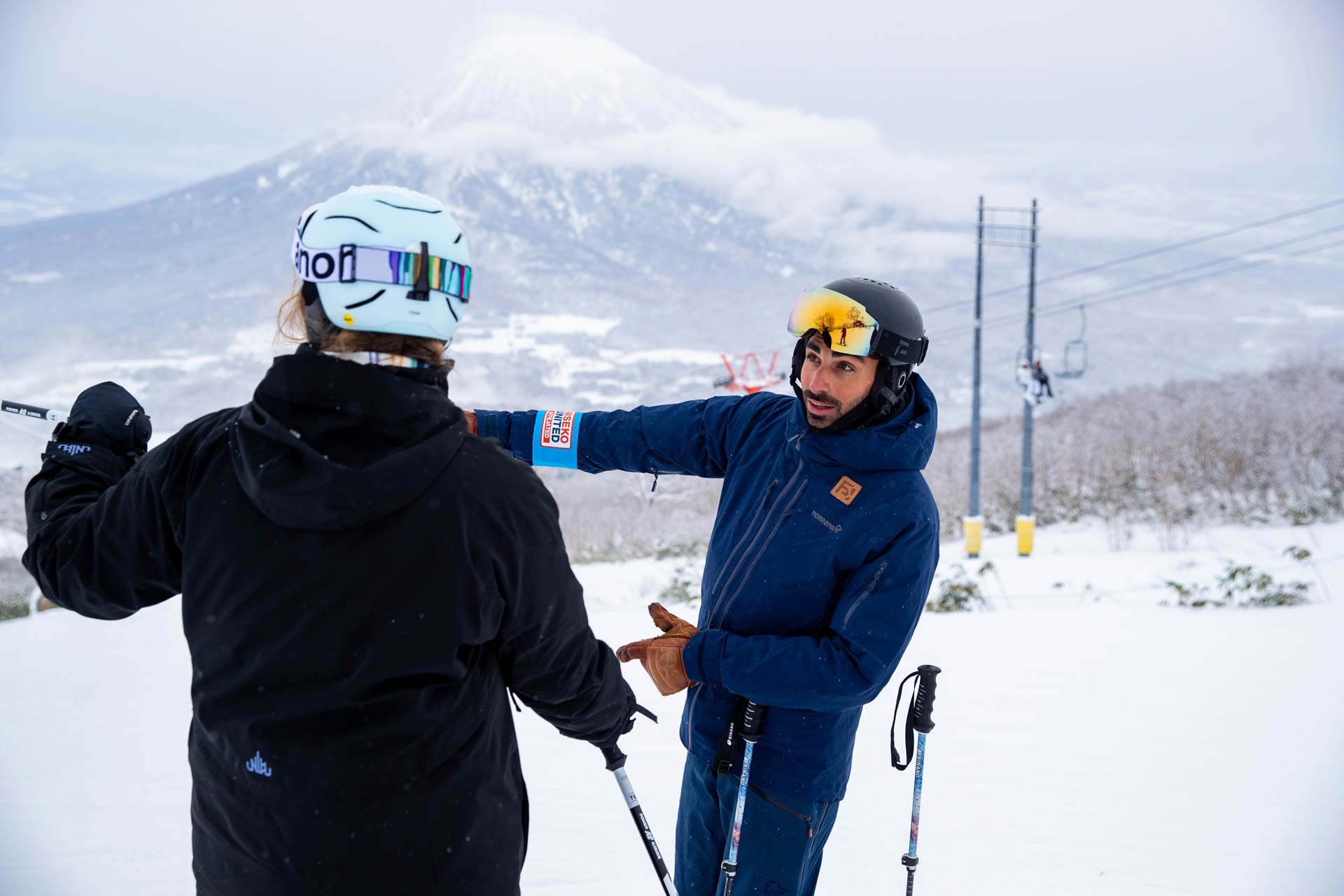
Every winter, guests ask me the same question: which ski school should I book?
It is a fair question. Niseko has more than 40 ski schools, and from the outside they can look much the same. Similar photos, similar promises, similar prices.
So here is who is answering. I have taught skiing for 34 seasons, in New Zealand, Europe and Japan. Today I am what you might call an instructor’s instructor: I train instructors, and I examine them, up to the highest qualification level there is. In 2015 I founded Far East Snowsports here in Niseko.
Which brings me to the disclaimer. I run my own snowsports school, so I am completely biased. Please make your own decision. What I can do is tell you what to ask before you book, and what a good instructor actually does once you are on the snow. I hope it helps you choose well, whichever school that turns out to be.
How Niseko’s ski schools are set up
Niseko is one mountain with several resort areas, and each resort has its own official school:
- Grand Hirafu: Niseko Grand Hirafu Snow School and GoSnow
- Hanazono: NISS
- Niseko Village: Niseko Village Snow School
- Annupuri: Niseko Annupuri Snow School
Then there are the independent schools, which is what Far East Snowsports is.
The difference matters more than most people realise. Resort schools usually come with priority lift lanes, and on a busy day in peak season that is a real benefit. If skipping queues is high on your list, it is worth having.
The catch is that the priority lane only works at the resort where that school is based. You cannot use it at the other resorts. An independent school like ours has no priority lane anywhere, and goes wherever the snow and the conditions are best that day. Our lessons start either at Annupuri, or with a pick-up from your accommodation, and from there we can take you to Hirafu, Annupuri, or beyond Niseko to Kiroro. Neither is better in every case. It is a trade-off, and you should choose it knowingly.
Start with what you want, not with the school
Before comparing schools, be honest about what you want from the lesson.
First time on skis or a board
Niseko is a good place to learn: soft snow, gentle beginner areas, and plenty of English-speaking instructors. What you need most is patience and a calm, clear progression, not a famous name.
Children
Some children love the social side of a group lesson and a kids’ centre with its own dedicated area, and a large resort school can be exactly the right call for them. A private lesson offers something different: care dedicated to your child, or to a group of children you choose yourself, such as siblings, cousins or friends. Not a group of children they have never met.
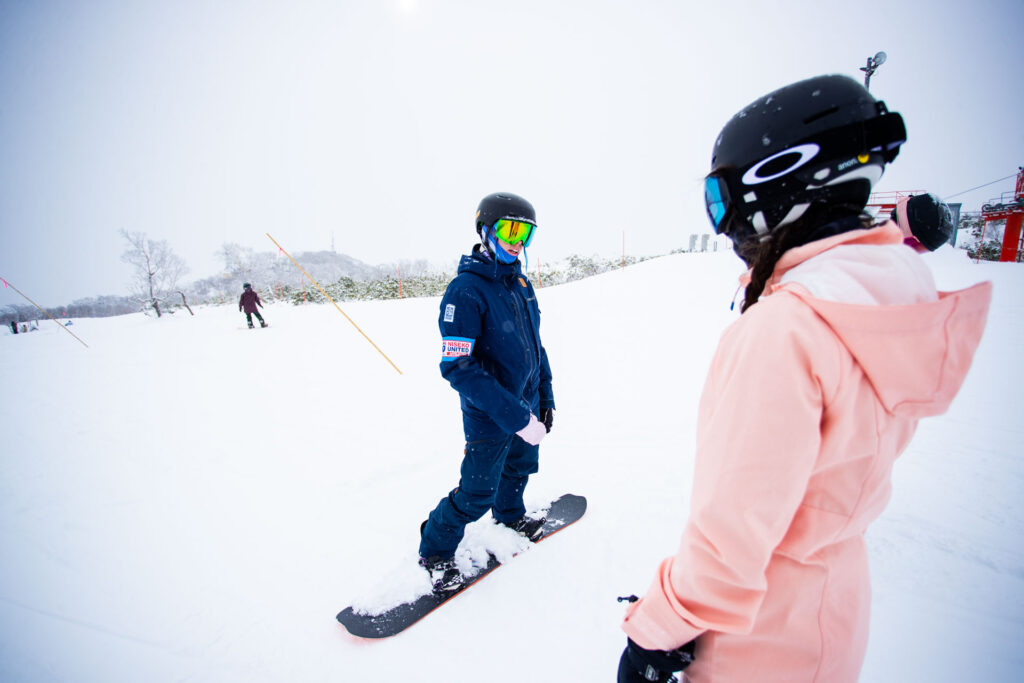
Intermediates who have stopped improving
This is the group I see underserved most often. Many people have skied for years and quietly plateaued. Another week of mileage rarely fixes it. Someone who can see what is holding you back, and explain it in a way that clicks, usually does.
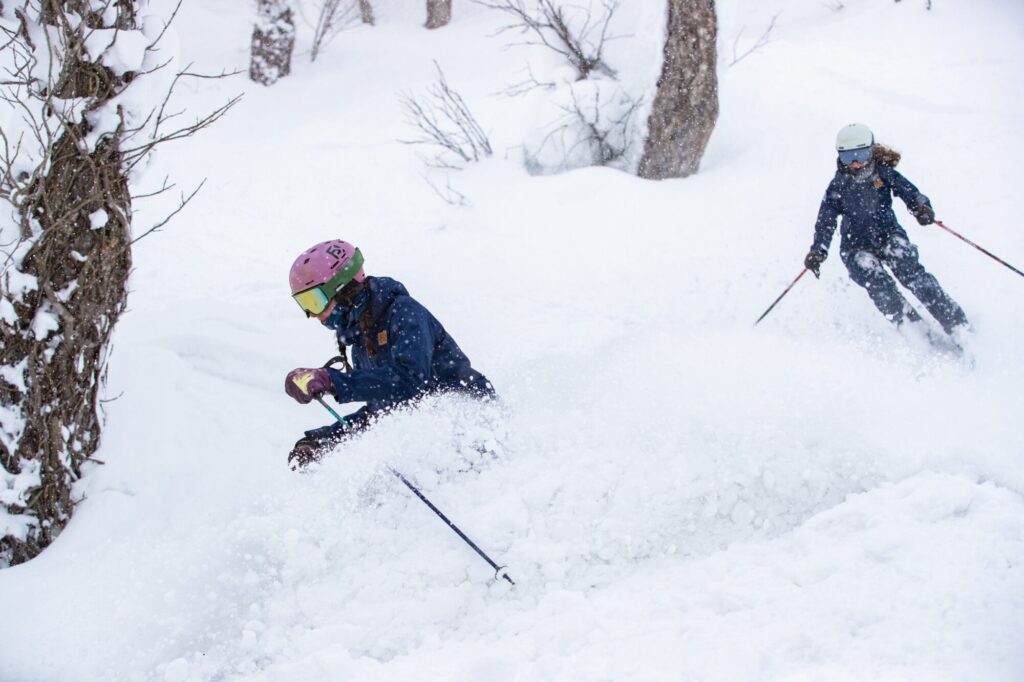
Powder and the gates
Niseko’s off-piste is famous, and easy to reach. Easy to reach is not the same as easy. Skiing or riding it well, and safely, needs skills, judgement and local knowledge. The same choice applies here: a large school or guiding company may put you in a group with people you have never met, while a private guide takes only you and the people you came with.
Then there is group versus private. Group lessons are cheaper and can be social. A private lesson is built entirely around you: your goals, your pace, your day.
Private does not have to mean one person. It means your group, and only your group: just you, a couple, a family, or a few friends on the mountain together. One instructor with one, two or three people you already know. At Far East Snowsports we teach only private lessons and private guiding, in skiing and snowboarding, because we believe the real value is the relationship between the instructor and the people they are teaching.

What a lesson costs
At the time of writing (October 2026), private lessons in Niseko generally cost:
| Lesson | Yen | US$ | € |
|---|---|---|---|
| Private, half day | ¥50,000 to ¥80,000 | about $320 to $510 | about €280 to €450 |
| Private, full day | ¥100,000 to ¥150,000 | about $630 to $950 | about €560 to €840 |
Conversions at US$1 = ¥158 and €1 = ¥178. Prices vary by school, season and group size, so check each school’s current rates.
How much of that price actually reaches the person teaching you is a question most guests never ask. It matters more than you might think, and I explain why in Why Experience Alone Doesn’t Make a Great Ski Instructor.
What to ask before you book
Before you book, ask the school these questions. A good school will answer them easily.
- How many seasons has the instructor taught, and how many of those in Niseko? Niseko’s snow, weather and terrain take years to learn.
- What qualification level do they hold? Ask what the level means in practice. A good school will explain it simply.
- How much Japanese do they speak? This is a bonus, not a must. An instructor who speaks Japanese can connect you far more closely with the local culture and the people who live here.
- Which resorts and areas can we ski? And if priority lanes matter to you, ask where they actually work.
- Is transport within Niseko included? Driving on snow can be tricky, and parking in peak season is hard to find. An instructor who can pick you up and drop you off makes the whole day easier. (At Far East Snowsports, transport is complimentary with every lesson.)
- Can we stop at local shops or places on the way, and does the instructor know the good ones? A day in Niseko is more than the hours on the snow.
What a good instructor does on the snow
Once you meet your instructor, watch for these things.
They ask what you want to get out of the day
Not a quick “what do you want to do?” On its own, that question is almost irresponsible. A good instructor asks real questions and listens to the answers, to get to know you as a person, not just a guest for the day they may never see again.
They offer options based on what you told them
If you are new to snowsports, or new to Niseko, you do not know what you do not know. A good instructor does not leave every decision to you. From your answers, they suggest things you might enjoy and might never have thought to ask for.
They read the day for you
The right terrain for your level and the conditions. The right technique for that terrain. The right place for lunch, and the right moment to go inside and warm up. You may not notice any of this happening. That is usually a sign it is being done well.
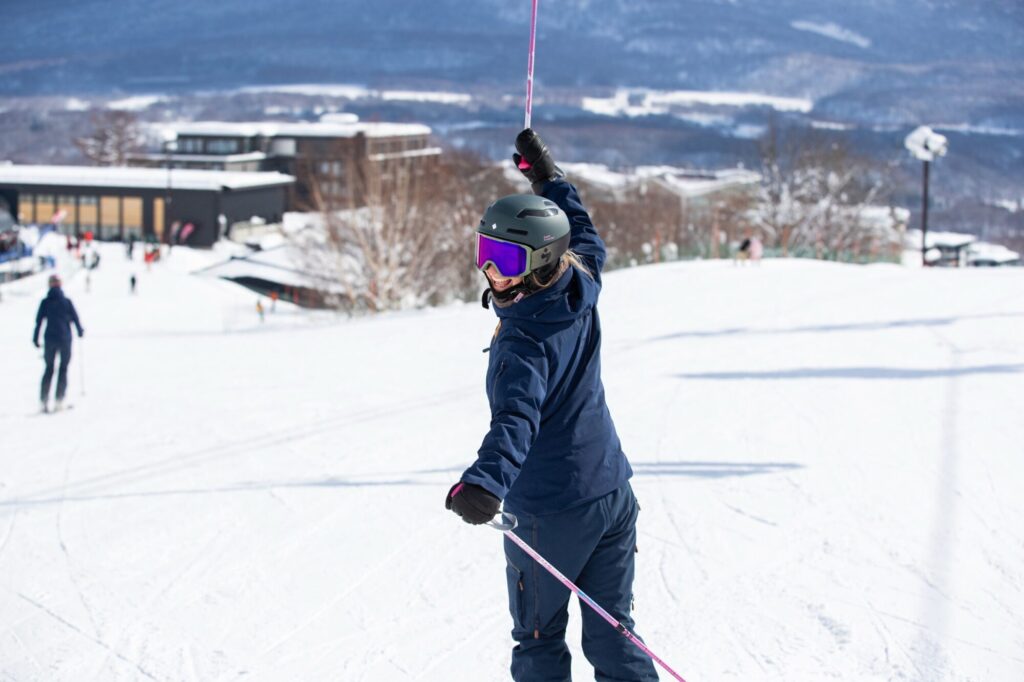
They are well known on the mountain
This one is a bonus, not a must. Do other instructors stop to say hello? Do they seem to know people wherever you go? Snowsports is a small industry, and connections matter. An instructor who is well connected hears about conditions sooner and knows the good places and spots, on the mountain and off it.
Experience is not the whole story
Seasons on snow matter, and you should always ask for the number. But on its own it can mislead you. An instructor can teach for twenty years and simply repeat their first season twenty times. What makes the difference is whether the school keeps developing its people, and that deserves an article of its own: Why Experience Alone Doesn’t Make a Great Ski Instructor.
Choosing well
If what you have read sounds like the lesson you want, whether you ski or snowboard, we would be glad to spend a day on the mountain with you. Book a lesson with Far East Snowsports
And if a resort school fits you better, perhaps because you want priority lanes at one resort, or a big group programme for young children, that is a good choice too. The right school is the one that fits you.